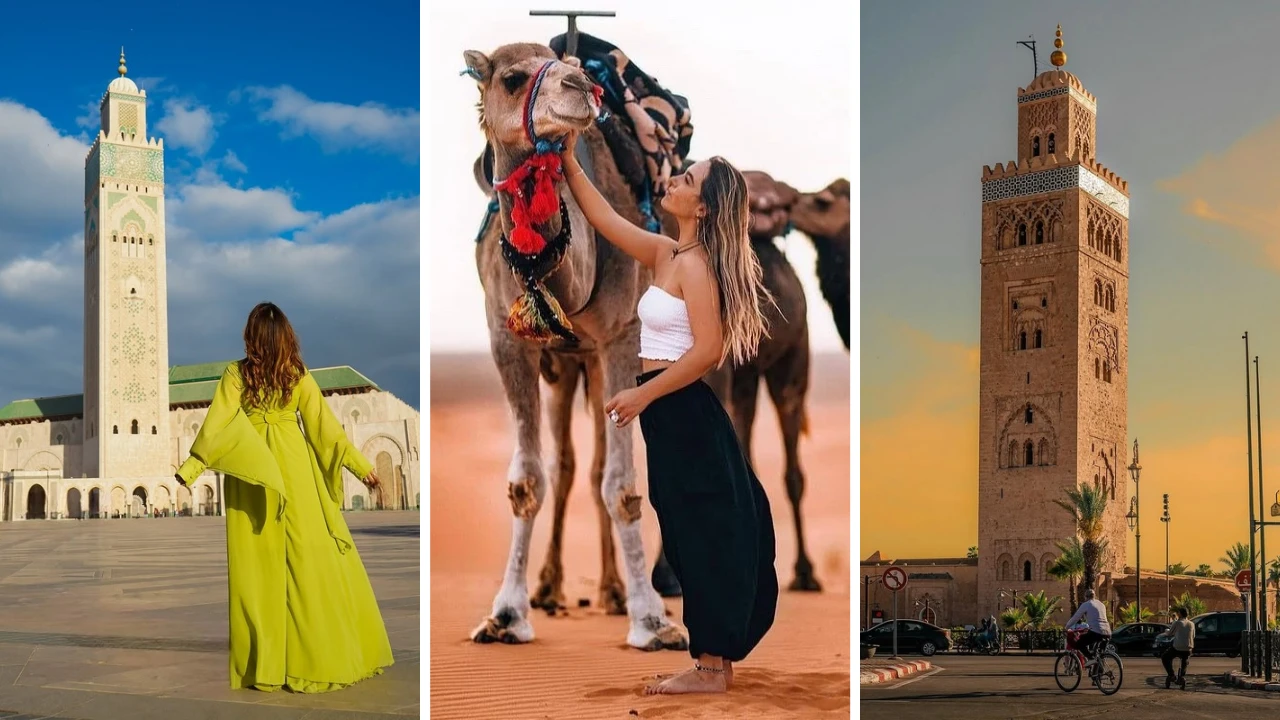

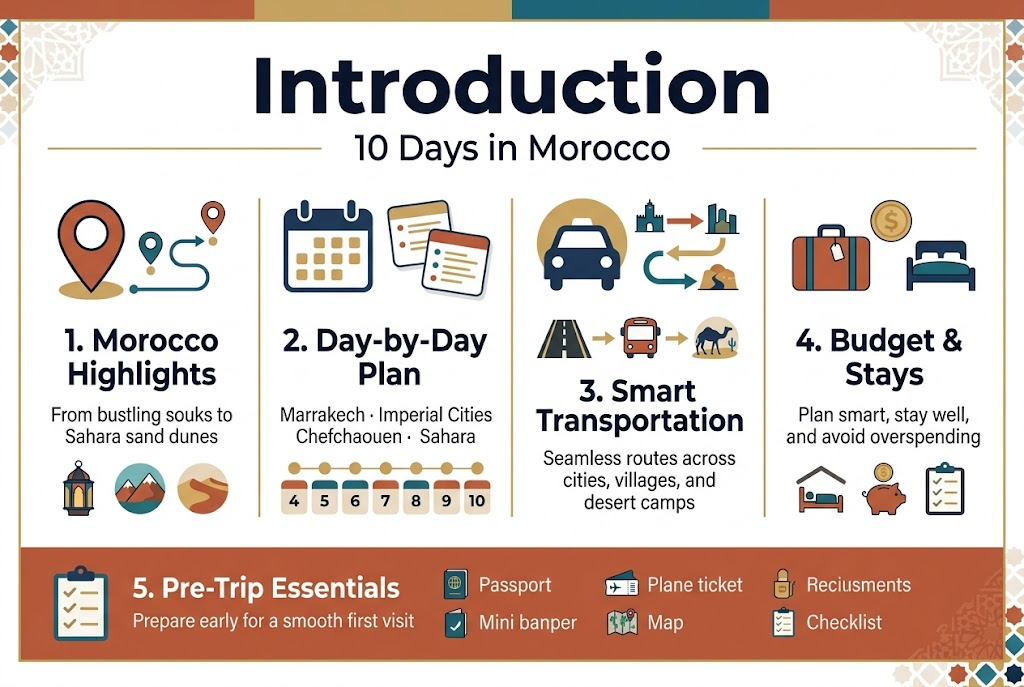
Morocco’s incredible diversity makes it perfect for a 10 days in morocco adventure that takes you from bustling souks to Sahara sand dunes. This complete morocco itinerary 10 days guide is designed for first-time visitors who want to experience the country’s highlights without feeling rushed or missing the must-see destinations.
You’ll discover how to maximize your time across Morocco’s most iconic cities and landscapes, starting with detailed day-by-day breakdowns that cover everything from Marrakech’s vibrant medina to the blue-washed streets of Chefchaouen. We’ll walk you through the best routes for your 10 day morocco tour, including practical transportation options that connect imperial cities, mountain villages, and desert camps seamlessly.
You’ll also get insider tips on smart budget planning and accommodation strategies that help you experience Morocco’s magic without breaking the bank, plus essential pre-trip planning advice that sets you up for success from day one.
Essential Pre-Trip Planning for Your Moroccan Adventure
Obtain Your Visa and Check Passport Requirements
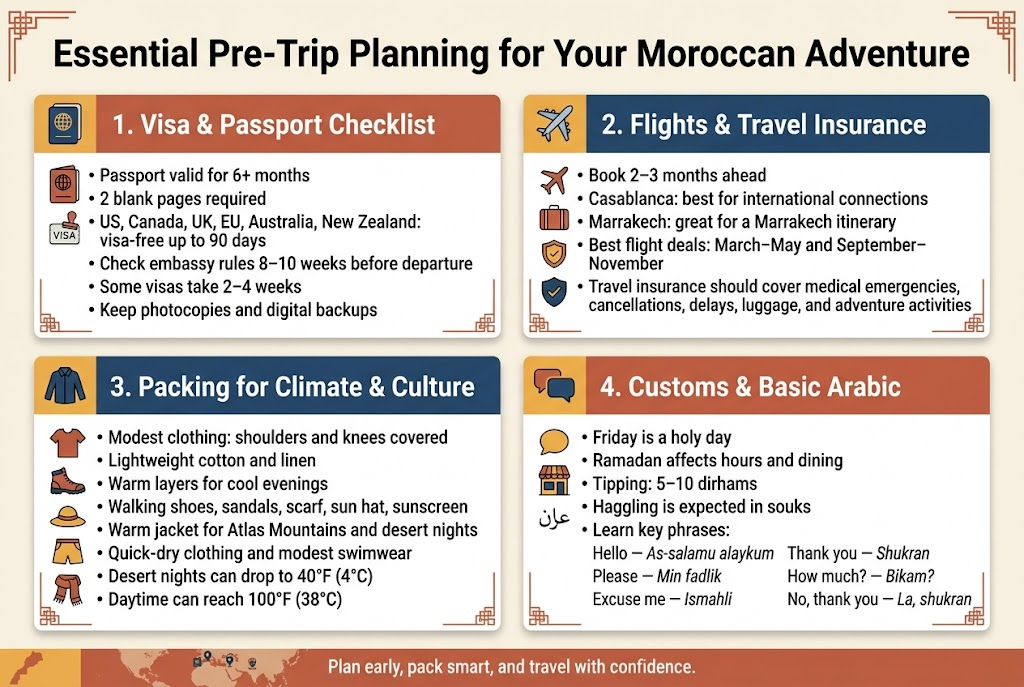
Most travelers to Morocco need just a valid passport with at least six months remaining before expiration. If you’re from the US, Canada, UK, EU countries, Australia, or New Zealand, you can enter Morocco visa-free for up to 90 days – perfect for your 10 days in Morocco adventure. Your passport should have at least two blank pages for entry and exit stamps.
However, visa requirements can change, so double-check the current regulations on Morocco’s official embassy website for your country at least 8-10 weeks before departure. Some nationalities require advance visa applications, which can take 2-4 weeks to process.
Make photocopies of your passport’s main page and keep them separate from the original. Store digital copies in your cloud storage and email them to yourself. This backup proves invaluable if your passport gets lost or stolen during your trip.
Book Flights and Secure Travel Insurance Coverage
Start hunting for flights to Morocco’s major airports 2-3 months ahead of your trip. Casablanca’s Mohammed V International Airport typically offers the most international connections, making it ideal for your 10 day morocco itinerary from casablanca. Marrakech’s Menara Airport works great if you’re planning a 10 days tour from marrakech.
Flight prices to Morocco vary dramatically by season. You’ll find the best deals during shoulder seasons (March-May and September-November), while summer and winter holidays command premium prices.
Travel insurance isn’t optional for Morocco – it’s your financial safety net. Look for coverage that includes:
- Medical emergencies and evacuations
- Trip cancellations and delays
- Lost or stolen luggage
- Adventure activities like camel trekking and hiking
Many credit cards offer basic travel insurance, but read the fine print carefully. Dedicated travel insurance policies usually provide more comprehensive coverage for international adventures.
Pack Appropriate Clothing for Diverse Climates and Cultural Sites
Morocco’s climate changes dramatically depending on where you go and when you visit. Your morocco travel itinerary 10 days will likely take you from coastal cities to mountain peaks to desert sands, so smart packing becomes crucial.
For cultural sites and city exploration, pack modest clothing that covers your shoulders and knees. This shows respect for local customs and helps you blend in better. Bring lightweight, breathable fabrics like cotton and linen for hot days, plus a few warmer layers for cool evenings and air-conditioned spaces.
Essential items for your Morocco packing list:
- Comfortable walking shoes with good grip
- Sandals for beach areas and relaxing
- Light scarf or shawl for mosque visits
- Sun hat and high-SPF sunscreen
- Warm jacket for Atlas Mountains and desert nights
- Quick-dry clothing for varied activities
- Modest swimwear for coastal areas
The Sahara Desert gets surprisingly cold at night, sometimes dropping to 40°F (4°C), while days can reach 100°F (38°C). Pack layers you can easily add or remove throughout the day.
Research Local Customs and Basic Arabic Phrases
Understanding Moroccan customs makes your trip smoother and more enjoyable. Moroccans are incredibly welcoming, but showing respect for their traditions creates deeper connections and better experiences.
Friday is the holy day in Morocco, so expect some businesses to close for prayers. Ramadan affects dining and business hours significantly – restaurants may be closed during daylight hours, though hotels usually accommodate tourists.
Tipping culture is important in Morocco. Budget for small tips (5-10 dirhams) for guides, porters, and service staff. Haggling is expected in souks and markets – start at about 30% of the asking price and negotiate from there.
Learn these essential Arabic phrases:
| English | Arabic | Pronunciation |
|---|---|---|
| Hello | As-salamu alaykum | Ah-sah-LAH-mu ah-LAY-kum |
| Thank you | Shukran | SHOOK-ran |
| Please | Min fadlik | Min FAD-lik |
| Excuse me | Ismahli | Is-MAH-lee |
| How much? | Bikam? | Bee-KAM? |
| No, thank you | La, shukran | LAH, SHOOK-ran |
Many Moroccans speak French due to the colonial history, and English is increasingly common in tourist areas. However, attempting Arabic phrases shows respect and often leads to warmer interactions with locals you’ll meet during your ten days in morocco.
Days 1-2: Immerse Yourself in Imperial Marrakech
Navigate the bustling souks and practice haggling techniques
Your first adventure in Marrakech starts the moment you step into the labyrinthine souks of the medina. These ancient markets are where your 10 day morocco itinerary truly begins to come alive with sensory overload in the best possible way. The narrow alleyways twist and turn like a medieval maze, lined with vendors selling everything from handwoven Berber carpets to aromatic spices that fill the air with exotic scents.
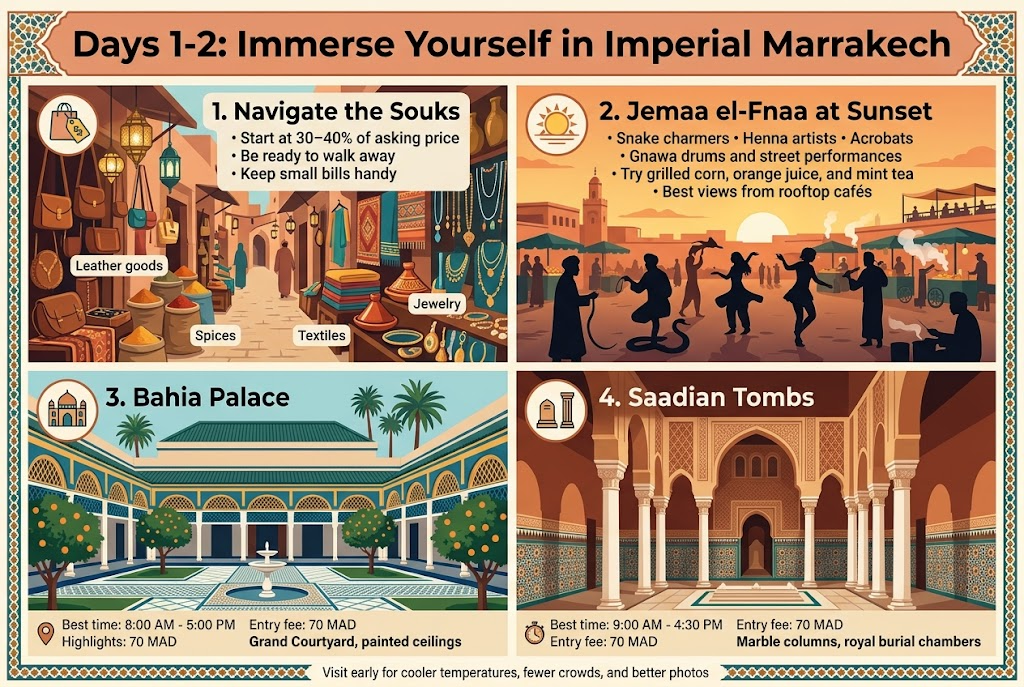
Before diving into the shopping experience, arm yourself with some basic haggling knowledge. Start by offering about 30-40% of the initial asking price, then work your way up slowly. Don’t be afraid to walk away – this often brings vendors chasing after you with better offers. Keep small bills handy, as many vendors claim they can’t make change for larger denominations.
Focus your shopping energy on authentic Moroccan crafts like leather goods from the famous tanneries, traditional tagines, colorful textiles, and handcrafted jewelry. The spice markets deserve special attention – you’ll find saffron, ras el hanout spice blends, and preserved lemons that make perfect souvenirs or ingredients for recreating Moroccan flavors back home.
Pro tip: Visit the souks in the early morning when vendors are setting up, or late afternoon when the harsh midday heat subsides. This timing also gives you better lighting for photographing your discoveries and makes the experience more comfortable overall.
Experience the magic of Jemaa el-Fnaa square at sunset
Jemaa el-Fnaa transforms into pure theater as the sun begins its descent over Marrakech. This UNESCO World Heritage square becomes the beating heart of your morocco travel itinerary 10 days experience, offering an authentic glimpse into Moroccan street culture that hasn’t changed much over centuries.
As daylight fades, the square awakens with snake charmers, henna artists, acrobats, and storytellers who captivate audiences in Arabic and Berber languages. You don’t need to understand the words to feel the energy and passion in their performances. The rhythmic beating of drums from Gnawa musicians creates a soundtrack that perfectly complements the visual spectacle unfolding around you.
Food stalls begin appearing as darkness settles, transforming the square into an open-air restaurant. You’ll smell grilled meats, steaming tagines, and fresh mint tea brewing at dozens of small stands. This is your chance to try authentic street food – start with safer options like grilled corn or fresh orange juice if you’re worried about stomach sensitivity.
For the best sunset views and photos, head to one of the rooftop cafés surrounding the square. Café Argana or Café de France offer elevated perspectives where you can sip mint tea while watching the daily transformation below. The golden hour light creates perfect conditions for capturing the square’s energy, and you’ll have a bird’s-eye view of the controlled chaos that makes this place so magnetic.
Discover architectural wonders at Bahia Palace and Saadian Tombs
Your second day in Marrakech should include these two architectural masterpieces that showcase Morocco’s rich imperial history. The Bahia Palace, built in the late 19th century, represents the pinnacle of Moroccan craftsmanship with its intricate tilework, painted cedar ceilings, and peaceful courtyards filled with orange trees and fountains.
Walking through the palace rooms, you’ll notice how each space tells a story of luxury and power. The Grand Courtyard stretches out like an outdoor ballroom, while the smaller intimate chambers show how wealthy Moroccan families lived during the height of the empire. The attention to detail in every carved plaster panel and geometric tile pattern will leave you amazed at the skill of Moroccan artisans.
The Saadian Tombs offer a different but equally fascinating glimpse into Morocco’s past. Hidden for centuries and only rediscovered in 1917, these burial chambers house members of the Saadian dynasty from the 16th and 17th centuries. The tomb of Ahmad al-Mansur stands out with its twelve columns of Italian Carrara marble and intricate decorative work that rivals anything you’ll see in Granada or Córdoba.
| Site | Best Visiting Time | Entry Fee | Key Highlights |
|---|---|---|---|
| Bahia Palace | 8:00 AM – 5:00 PM | 70 MAD | Grand Courtyard, painted ceilings |
| Saadian Tombs | 9:00 AM – 4:30 PM | 70 MAD | Marble columns, royal burial chambers |
Both sites get crowded by mid-morning, so arrive early to appreciate the peaceful atmosphere and get better photos without crowds. The combination of these architectural wonders gives you deep insight into Morocco’s artistic heritage and sets the perfect foundation for the rest of your ten days in morocco adventure.
Days 3-4: Journey Through the Dramatic Atlas Mountains
Drive scenic mountain passes with breathtaking valley views
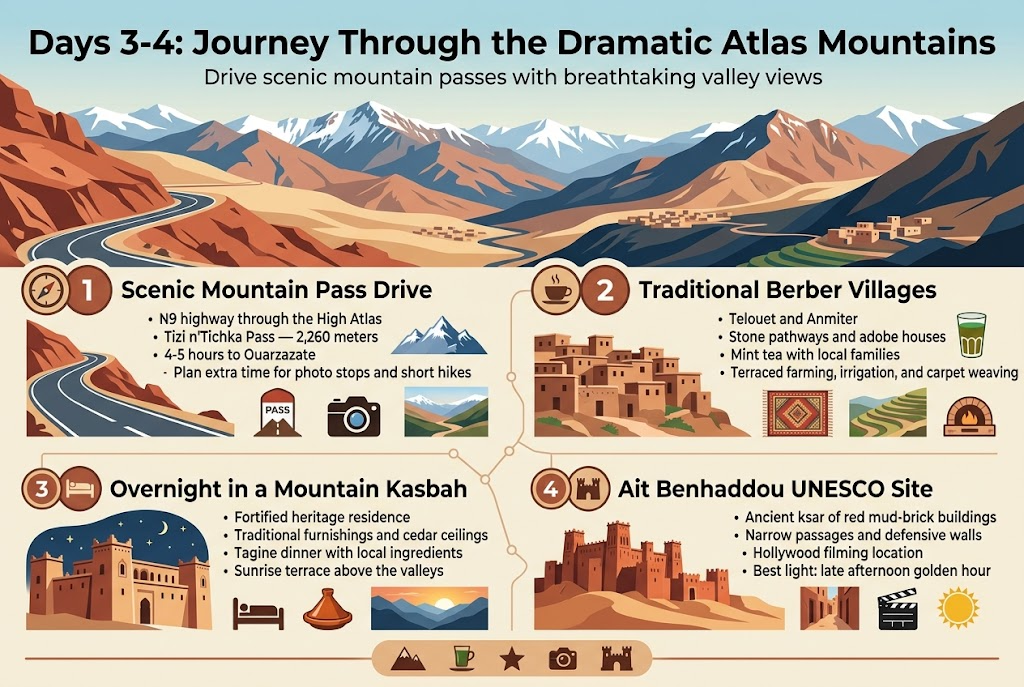
Your journey from Marrakech into the Atlas Mountains begins with one of Morocco’s most spectacular drives. The N9 highway winds through the High Atlas, taking you over the famous Tizi n’Tichka Pass at 2,260 meters above sea level. You’ll find yourself stopping every few kilometers to capture the dramatic landscape unfolding before you – red earth contrasting against snow-capped peaks, deep valleys dotted with traditional villages, and endless mountain ridges stretching to the horizon.
The drive typically takes 4-5 hours to reach Ouarzazate, but you’ll want to allow extra time for photo stops and short hikes. Pack layers since temperatures can drop significantly as you gain elevation, even during summer months. Your Morocco road trip 10 days adventure truly comes alive on these winding mountain roads where each turn reveals a new postcard-worthy vista.
Visit traditional Berber villages and learn local customs
Scattered throughout the Atlas Mountains, authentic Berber villages offer you glimpses into a way of life unchanged for centuries. In villages like Telouet and Anmiter, you’ll walk narrow stone pathways between adobe houses where families have lived for generations. Local residents often invite travelers for mint tea, sharing stories about their agricultural practices and traditional crafts.
You’ll discover how Berber communities have adapted to mountain life – terraced farming on steep slopes, intricate irrigation systems, and cooperative carpet weaving that supports entire villages. Women demonstrate traditional bread-making in communal ovens while children play games passed down through oral tradition. These interactions provide cultural depth that makes your ten days in morocco truly memorable beyond just sightseeing.
Stay overnight in a mountain kasbah for authentic experiences
Mountain kasbahs transform your Atlas experience from day trip to immersive cultural journey. These fortified residences, originally built by wealthy families, now welcome guests into rooms with traditional furnishings, carved cedar ceilings, and views over valley floors. Kasbah du Toubkal and similar properties offer you authentic architecture while providing modern comfort.
Your evening includes traditional tagine dinners prepared with local ingredients, often featuring lamb raised in surrounding valleys and vegetables grown in kasbah gardens. You’ll sleep under stars visible only at high altitude, wake to mountain sunrise, and enjoy breakfast on terraces overlooking Berber villages below. This overnight experience connects you directly with Morocco’s mountain heritage.
Explore Ait Benhaddou UNESCO World Heritage site
Ait Benhaddou represents one of Morocco’s most photographed locations – and for good reason. This ancient fortified village, or ksar, showcases traditional pre-Saharan architecture with its red mud-brick buildings rising dramatically from the desert landscape. You’ll climb through narrow passages between houses, exploring rooms where families once lived and stored grain for trade caravans.
Your visit includes guided exploration of the site’s defensive walls, communal areas, and panoramic viewpoints. The village has served as backdrop for numerous Hollywood films including “Gladiator” and “Game of Thrones,” but its authentic historical significance as a trading post along trans-Saharan routes makes it essential for your 10 day morocco itinerary. Plan your visit for late afternoon when golden light enhances the red earthen walls, creating perfect photography conditions.
Days 5-6: Experience the Sahara Desert Like Never Before
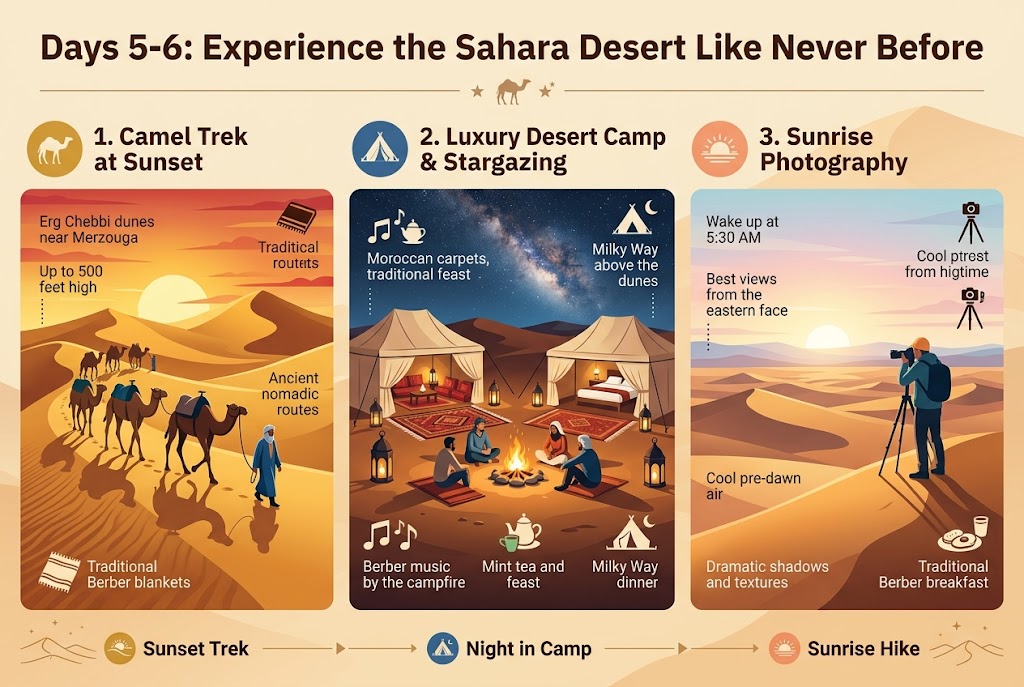
Ride camels into golden sand dunes at sunset
Your 10 day morocco itinerary wouldn’t be complete without the iconic camel trek into Erg Chebbi, the towering dunes near Merzouga that rise up to 500 feet high. You’ll meet your gentle camel companions in the late afternoon, when the desert heat begins to soften and the light starts its magical transformation. The rhythmic swaying motion takes some getting used to, but within minutes you’ll find yourself mesmerized by the endless sea of golden sand stretching toward the horizon.
Your guide will lead your camel caravan deeper into the dunes, following ancient nomadic routes that have remained unchanged for centuries. As you climb higher, the views become absolutely breathtaking – rolling waves of sand painted in shades of amber, copper, and gold. The silence is profound, broken only by the soft padding of camel feet on sand and the gentle tinkling of bells around their necks.
The sunset show begins about an hour before the sun disappears, when the entire landscape transforms into a painter’s canvas. Colors shift from bright gold to deep orange, then to rich crimson and purple. You’ll have plenty of time to dismount and capture photos, but nothing compares to simply sitting on a dune and watching this daily miracle unfold. The temperature drops quickly once the sun sets, so your guide will provide traditional Berber blankets to keep you warm during the journey to camp.
Sleep under star-filled skies in luxury desert camps
Your desert camp experience elevates traditional Bedouin living with modern comfort and style. These luxury camps feature spacious canvas tents equipped with real beds, private bathrooms, and even electricity – a far cry from basic camping. Each tent is decorated with beautiful Moroccan carpets, lanterns, and traditional furnishings that create an authentic yet comfortable atmosphere.
The evening begins with traditional Berber music around a crackling campfire, where local musicians play drums and sing ancient songs passed down through generations. You’ll join other travelers sharing stories while sipping mint tea and enjoying a feast of tagines, couscous, and grilled meats prepared in traditional clay ovens buried in the sand.
As night falls, the desert reveals one of its greatest treasures – a sky so clear and unpolluted that you can see the Milky Way stretching across the heavens like a cosmic river. The lack of light pollution means stars appear brighter and more numerous than you’ve ever seen before. Many camps provide blankets so you can lie on the sand dunes and stargaze until late into the night. The silence is so complete that you can actually hear the sand shifting in the breeze.
Your tent becomes a cozy refuge when you’re ready to sleep, but many guests find themselves stepping outside multiple times during the night just to marvel at the celestial display above.
Wake early for spectacular sunrise photography opportunities
Set your alarm for 5:30 AM – trust us, it’s worth every minute of lost sleep. The pre-dawn desert air is crisp and refreshing, a stark contrast to the previous day’s heat. Your camp guide will wake early risers and lead a small group up nearby dunes to catch the sunrise from the best vantage points.
The magic begins about 30 minutes before sunrise, when the sky starts glowing with soft pastels – pale pink, lavender, and peach hues that gradually intensify. As you climb the dunes in the pre-dawn light, you’ll notice how the sand feels cool and firm under your feet. The higher you go, the more spectacular the panoramic views become.
Position yourself on the eastern face of a tall dune for the best sunrise shots. Professional photographers recommend bringing a tripod if you have one, but handheld photos work beautifully too. The key is capturing the dramatic shadows and textures that appear as the sun’s rays hit the dunes at low angles. The interplay of light and shadow creates natural patterns that change by the minute.
Within 30 minutes of sunrise, the entire desert transforms from cool blues and purples to warm golds and oranges. This morocco travel itinerary 10 days moment becomes one of those experiences you’ll remember forever – standing atop ancient sand dunes, watching the Sahara Desert come alive with morning light, knowing you’re experiencing one of nature’s most spectacular daily performances.
The temperature rises quickly after sunrise, so you’ll head back to camp for a traditional Berber breakfast before continuing your 10 day morocco tour journey.
Days 7-8: Discover the Blue Pearl of Chefchaouen
Wander through Instagram-worthy blue-painted streets
You’ll fall head over heels for Chefchaouen the moment you step into its maze of cobalt-blue streets. Every corner offers a new photo opportunity as you explore the medina’s narrow alleyways painted in dozens of blue shades. The locals say the blue keeps mosquitoes away, while others believe it represents the sky and heaven. Whatever the reason, you’ll find yourself constantly reaching for your camera.
Start your morning exploration early when the soft light creates magical shadows on the blue walls. The main square, Plaza Uta el-Hammam, serves as your perfect starting point. From here, you can navigate the winding streets that lead to hidden corners where local children play and elderly men gather for tea. Don’t miss Rue Zawiya, one of the most photographed streets in Morocco, where the blue paint creates stunning geometric patterns.
Your 10 days in morocco wouldn’t be complete without capturing these iconic blue streets that have made Chefchaouen famous worldwide. The best lighting for photography happens during golden hour – about an hour before sunset when warm light contrasts beautifully with the cool blue tones.
Hike to Spanish Mosque for panoramic mountain views
A 45-minute uphill trek takes you to the Spanish Mosque, perched on a hillside overlooking Chefchaouen. You’ll work up a sweat on this moderate hike, but the breathtaking panoramic views make every step worthwhile. The mosque itself dates back to the 1920s, though it’s no longer active for worship.
Pack water and wear comfortable hiking shoes for this adventure. The trail starts behind the Hotel Atlas and winds through olive groves and rocky terrain. You’ll pass local shepherds with their goats and enjoy increasingly spectacular views as you climb higher.
The sunset view from this vantage point ranks among Morocco’s most spectacular. You’ll see the blue city spread out below like a sapphire jewel nestled between the Rif Mountains. Many travelers consider this the highlight of their morocco travel itinerary 10 days. Bring a headlamp for the descent if you stay for sunset – the trail can be tricky in darkness.
Shop for unique handicrafts in local artisan workshops
Chefchaouen’s artisan scene buzzes with creativity and traditional craftsmanship. You’ll discover workshops tucked into the medina’s blue streets where skilled craftsmen create beautiful handmade goods. Unlike the aggressive sales tactics in larger cities, Chefchaouen’s artisans welcome you with genuine warmth and patience.
Visit the wool cooperatives where local women spin and dye yarn using traditional methods passed down through generations. You can watch them create the colorful blankets and rugs that make perfect souvenirs. The leather workshops produce high-quality bags, shoes, and belts at prices significantly lower than Marrakech or Fez.
Don’t miss the pottery studios where artists craft beautiful tagines and decorative pieces. Many workshops offer hands-on experiences where you can try your hand at traditional crafts. The hemp shops sell unique bags, hats, and jewelry – Chefchaouen sits in Morocco’s primary hemp-growing region.
Pro tip: Bargaining is expected, but keep it friendly. Start at about 60% of the asking price and negotiate with a smile.
Savor traditional tagines at rooftop restaurants
Your taste buds are in for a treat at Chefchaouen’s rooftop restaurants, where traditional Moroccan cuisine meets stunning mountain views. The city’s culinary scene focuses on fresh, local ingredients from the surrounding Rif Mountains. You’ll taste the difference immediately – vegetables are crisp, herbs are aromatic, and spices are perfectly balanced.
Try the goat tagine, a local specialty that’s tender and flavorful, often cooked with prunes and almonds. The vegetarian tagines here shine brighter than anywhere else in your 10 day morocco tour, loaded with seasonal vegetables and complex spice blends. Many restaurants source their produce from family gardens just outside the medina walls.
Restaurant Beldi Bab Ssour offers exceptional mountain views alongside their famous lamb tagine. Café Clock serves fusion dishes that blend Moroccan traditions with international flavors. For the most authentic experience, Restaurant Tissemlal provides home-style cooking in a cozy rooftop setting where local families have perfected their recipes over decades.
The mint tea here tastes particularly refreshing after your mountain hikes, and the almond cookies provide the perfect sweet ending to your meals.
Days 9-10: Explore Historic Fez and Cultural Treasures
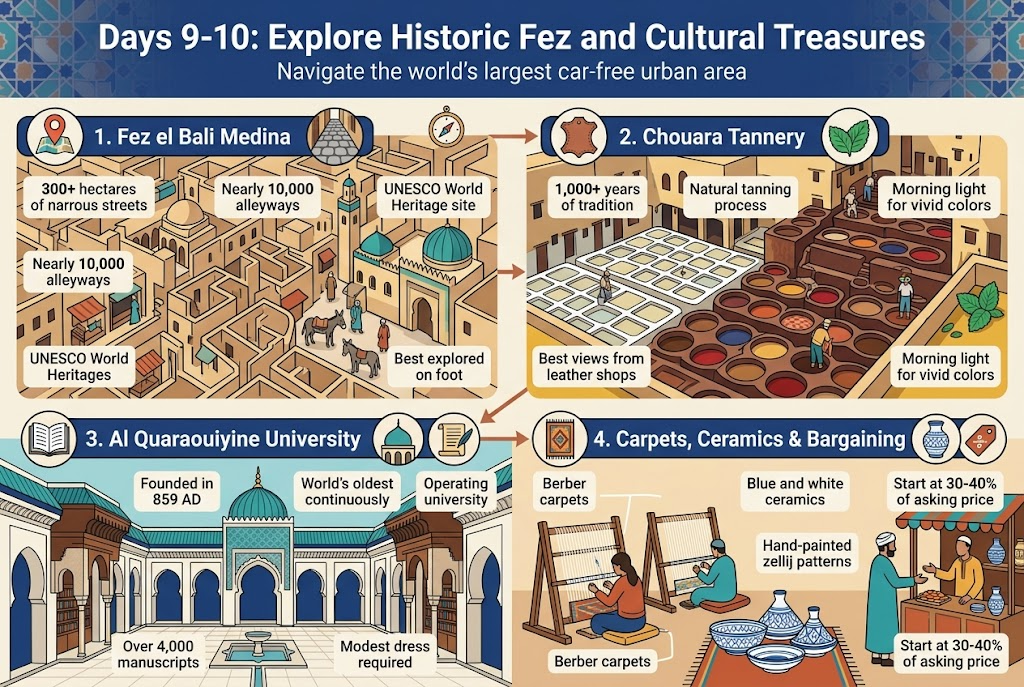
Navigate the world’s largest car-free urban area
Your final stop on this incredible 10 day morocco tour brings you to Fez, where you’ll step into the world’s most extensive car-free urban zone. The Fez el Bali medina spans over 300 hectares and houses nearly 10,000 narrow alleyways that have remained unchanged for centuries. You’ll quickly discover that getting lost here isn’t just possible – it’s almost guaranteed, and that’s part of the magic.
Pack comfortable walking shoes because you’ll cover serious ground exploring this UNESCO World Heritage site. The cobblestone streets wind through a maze of souks, mosques, and traditional houses called riads. Your smartphone GPS won’t help much here, so embrace the adventure and ask locals for directions. Most speak enough English or French to point you toward major landmarks.
Start your exploration early in the morning when the medina comes alive with vendors setting up their stalls. The narrow passages fill with donkeys carrying goods, craftsmen heading to their workshops, and locals going about their daily routines. You’ll witness a living medieval city that functions much like it did 1,000 years ago.
Witness leather tanning processes at ancient tanneries
The Chouara Tannery represents one of Morocco’s most iconic experiences, and you’ll smell it long before you see it. These leather-working pits have operated using the same techniques for over 1,000 years, making them a must-see highlight of your morocco travel itinerary 10 days.
Your guide will hand you fresh mint leaves to hold under your nose – trust us, you’ll need them. The natural tanning process uses pigeon droppings, cow urine, and various plant extracts to cure the hides. While the smell challenges most visitors, watching skilled craftsmen work these ancient stone vats creates unforgettable memories.
The best viewing spots are from the leather shops surrounding the tannery. Shop owners welcome visitors to their terraces for panoramic views of the colorful dyeing vats below. You’ll see workers standing knee-deep in the solutions, manually treating sheepskins, goatskins, and cowhides using methods passed down through generations.
Visit during morning hours when the light creates stunning contrasts between the white, yellow, red, and brown dye pools. The workers move with practiced precision, and you’ll gain deep appreciation for the craftsmanship behind Morocco’s renowned leather goods. Don’t forget your camera – this scene appears on countless travel magazines for good reason.
Visit Al Quaraouiyine University, the world’s oldest continuously operating university
Your educational pilgrimage leads to Al Quaraouiyine University, founded in 859 AD by Fatima al-Fihri, making it older than Oxford, Cambridge, or the Sorbonne. This institution has operated continuously for over 1,160 years, earning recognition from UNESCO and the Guinness Book of World Records as the world’s oldest degree-granting university.
The university connects to the Al Quaraouiyine Mosque, creating a massive complex that dominates Fez’s spiritual and intellectual landscape. You’ll need to dress modestly and respect prayer times when planning your visit. Non-Muslims can view the courtyard and exterior architecture but cannot enter the main prayer hall.
The library houses one of the world’s most important collections of Islamic manuscripts, with over 4,000 texts covering theology, law, astronomy, and medicine. Some manuscripts date back to the 9th century and represent priceless contributions to human knowledge. While access requires special permission, the building’s architecture alone justifies your visit.
Walk through the surrounding streets where Islamic scholars have debated theology and philosophy for centuries. The university continues operating today, training Islamic scholars from across Africa and the Middle East. You’re witnessing a living piece of educational history that predates most European nations.
Purchase authentic Moroccan carpets and ceramics
Your shopping adventure in Fez requires strategy, patience, and excellent bargaining skills. The city produces some of Morocco’s finest handicrafts, particularly carpets and ceramics that showcase centuries of artistic tradition. You’ll find authentic pieces here that cost significantly less than similar items in Marrakech or tourist areas.
Start at the carpet cooperatives where you can watch weavers creating intricate Berber designs on traditional looms. These artisans spend months completing single pieces, and you’ll gain appreciation for the skill required. Look for carpets with natural dyes, tight weaves, and traditional geometric patterns. Expect to pay between $200-800 for quality pieces, depending on size and complexity.
The pottery quarter produces Fez’s famous blue and white ceramics, instantly recognizable by their intricate geometric patterns. Visit workshops where craftsmen hand-paint each piece using techniques perfected over generations. Popular items include tagines, serving platters, and decorative tiles called zellij that adorn Morocco’s most beautiful buildings.
Negotiate prices at multiple shops before making major purchases. Start by offering 30-40% of the asking price and work toward a middle ground. Most merchants expect bargaining and often quote inflated initial prices. Remember that shipping large items internationally adds considerable cost, so factor this into your budget planning for your ten days in morocco adventure.
Transportation and Accommodation Strategies for Maximum Comfort
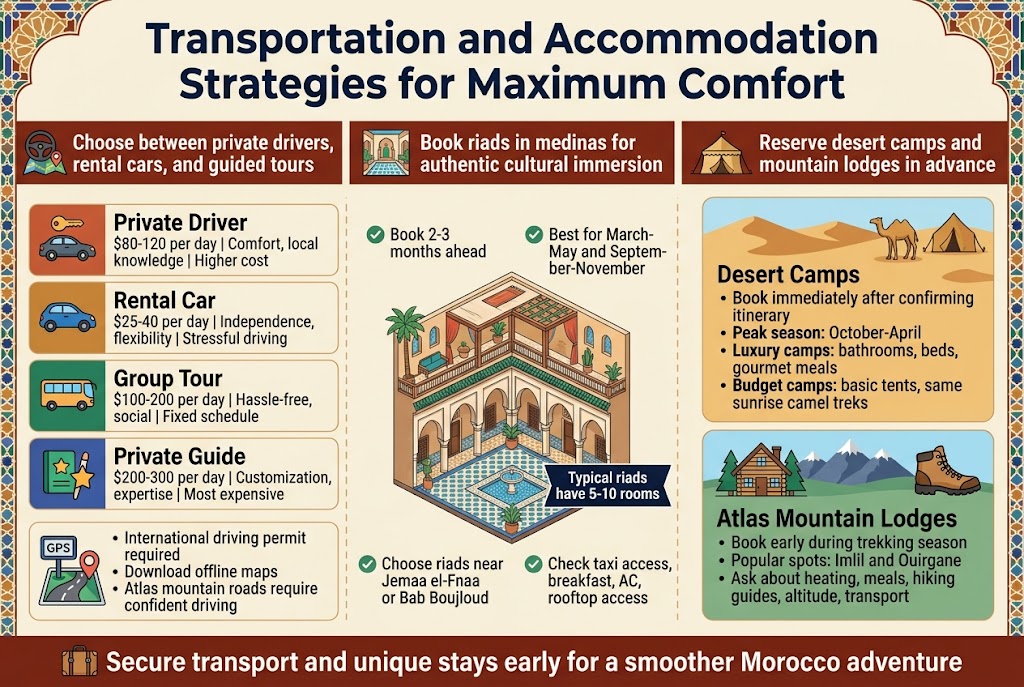
Choose between private drivers, rental cars, and guided tours
Your choice of transportation will make or break your 10 days in Morocco experience. Private drivers offer the ultimate convenience for your morocco travel itinerary 10 days, handling navigation through chaotic medinas and mountain passes while you relax. Expect to pay $80-120 per day for a skilled driver with a comfortable vehicle. They know the best photo stops, authentic restaurants, and can adjust your schedule on the fly.
Rental cars give you complete freedom to explore at your own pace during your 10 day morocco road trip. Major companies like Hertz and Avis operate in cities, but local agencies often offer better rates. You’ll need an international driving permit and nerves of steel for city driving. Mountain roads require confident handling, especially on winding Atlas passes. GPS doesn’t always work perfectly in rural areas, so download offline maps beforehand.
Guided tours work brilliantly if you want expert knowledge without planning stress. Small group tours (8-12 people) strike the perfect balance between personal attention and cost efficiency. Many 10 day morocco tour from casablanca packages include transportation, accommodation, and meals, simplifying your entire trip. Private guided tours cost more but offer customized experiences tailored to your interests.
| Transport Option | Cost/Day | Best For | Drawbacks |
|---|---|---|---|
| Private Driver | $80-120 | Comfort, local knowledge | Higher cost |
| Rental Car | $25-40 | Independence, flexibility | Stressful driving |
| Group Tour | $100-200 | Hassle-free, social | Fixed schedule |
| Private Guide | $200-300 | Customization, expertise | Most expensive |
Book riads in medinas for authentic cultural immersion
Staying in traditional riads transforms your ten days in morocco from simple sightseeing into genuine cultural immersion. These converted merchant houses feature stunning courtyards, intricate tilework, and rooftop terraces where you’ll sip mint tea while watching the sunset paint ancient walls golden.
Book your riad accommodations at least 2-3 months ahead, especially for peak seasons (March-May and September-November). Popular riads in Marrakech’s medina fill up quickly because they typically have only 5-10 rooms. Look for properties with excellent reviews on location – some riads sit deep in maze-like alleys where taxi access becomes impossible.
Your riad experience varies dramatically based on location and management. Choose riads near major landmarks like Jemaa el-Fnaa in Marrakech or Bab Boujloud in Fez for easy exploration. Many riads offer airport transfers, cooking classes, and hammam treatments that enhance your stay. Staff members often provide insider tips about local artisans and hidden restaurants that guidebooks miss.
Consider these riad booking strategies:
- Read recent reviews about noise levels and service quality
- Confirm exact location and taxi accessibility
- Ask about breakfast quality and dietary accommodations
- Verify air conditioning availability for summer visits
- Inquire about rooftop access and city views
Reserve desert camps and mountain lodges in advance
Desert camps book up months ahead because Morocco’s Sahara experience ranks among the world’s most sought-after adventures. Luxury camps in Erg Chebbi offer proper bathrooms, comfortable beds, and gourmet meals under star-filled skies. Budget camps provide basic tents with shared facilities but deliver the same magical sunrise camel treks.
Book your Sahara camp reservation immediately after confirming your morocco itinerary 10 days. Peak season (October-April) sees camps reach capacity, leaving last-minute travelers disappointed. Many camps include camel trekking, traditional music performances, and Berber cultural experiences in their packages.
Atlas Mountain lodges require similar advance planning, particularly during trekking season. These properties range from basic mountain huts to luxury eco-lodges with spa services. Popular spots like Imlil (Mount Toubkal base) and Ouirgane fill quickly during spring hiking season.
Mountain accommodation booking tips:
- Confirm heating availability for winter visits
- Ask about meal options and dietary restrictions
- Verify hiking guide availability and experience levels
- Check altitude levels if you’re sensitive to elevation
- Inquire about transportation from nearest road access
Your 10 day morocco tour from casablanca becomes infinitely smoother when you secure these unique accommodations early. Desert camps and mountain lodges offer limited availability but unforgettable experiences that define your Moroccan adventure.
Budget Planning and Money-Saving Tips for Smart Travelers
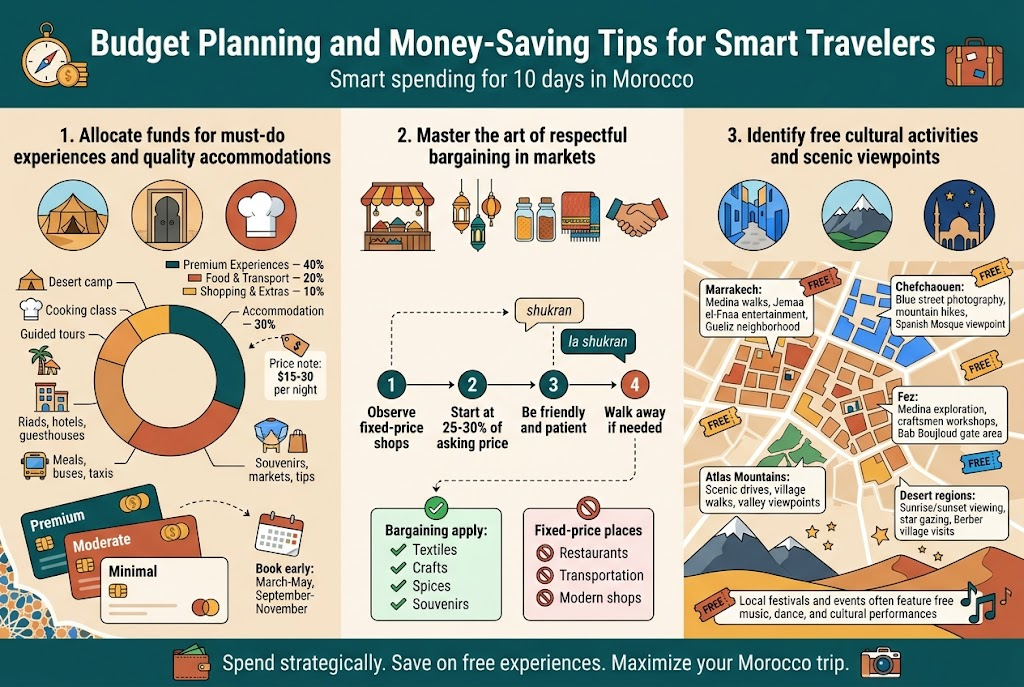
Allocate funds for must-do experiences and quality accommodations
Your 10 days in morocco experience deserves strategic spending that maximizes value while keeping costs manageable. Start by identifying non-negotiable experiences that define your morocco travel itinerary 10 days – a night in a luxury desert camp in the Sahara, a traditional riad in Marrakech’s medina, or a cooking class with a local family in Fez. These premium experiences typically account for 40-50% of your total budget but create the memories that last a lifetime.
When planning your 10 day morocco itinerary from casablanca, research accommodation options thoroughly. Riads offer authentic experiences at mid-range prices, while budget travelers can find excellent hostels and guesthouses for $15-30 per night. Book desert camps and popular riads well in advance, especially during peak seasons (March-May and September-November), as prices can double for last-minute bookings.
Create a tiered budget system: allocate premium funds for unique experiences like camel trekking and Atlas Mountain guides, moderate spending for decent meals and transportation, and minimal costs for markets and walking tours. This approach ensures you don’t overspend early in your trip and miss out on later opportunities.
| Experience Category | Budget Allocation | Examples |
|---|---|---|
| Premium Experiences | 40% | Desert camp, cooking classes, guided tours |
| Accommodation | 30% | Riads, hotels, guesthouses |
| Food & Transport | 20% | Meals, buses, taxis |
| Shopping & Extras | 10% | Souvenirs, markets, tips |
Master the art of respectful bargaining in markets
Bargaining isn’t just expected in Moroccan souks – it’s part of the cultural experience that enhances your ten days in morocco adventure. Start by observing prices at fixed-price shops to understand baseline costs, then use this knowledge when negotiating in traditional markets.
Your opening strategy should begin at roughly 25-30% of the seller’s initial price. Stay friendly and patient throughout the process, as rushing signals desperation and weakens your position. Learn basic Arabic or French numbers to show respect for the culture and often secure better deals. Phrases like “shukran” (thank you) and “la shukran” (no thank you) go a long way.
Walk away if prices don’t meet your expectations – this classic technique often brings sellers back with better offers. However, only use this strategy if you’re genuinely prepared to leave without the item. Respect the time invested by both parties; if you’ve engaged in serious negotiation, be prepared to purchase at a fair price.
Remember that bargaining isn’t appropriate everywhere. Fixed prices apply in restaurants, transportation, and modern shops. Focus your negotiation skills on textiles, crafts, spices, and souvenirs where bargaining is expected and welcomed.
Identify free cultural activities and scenic viewpoints
Your morocco road trip 10 days doesn’t require constant spending to be enriching. Each major city offers incredible free experiences that provide authentic cultural immersion without impacting your budget.
In Marrakech, spend hours wandering the medina’s labyrinthine streets, watching street performers in Jemaa el-Fnaa square, and admiring the exterior architecture of the Koutoubia Mosque. The Majorelle Garden entrance fee is worth it, but you can enjoy the surrounding neighborhoods for free.
Chefchaouen’s blue-painted streets create a natural outdoor gallery – perfect for photography enthusiasts. Hike the surrounding Rif Mountains using well-marked trails, or simply climb to the Spanish Mosque at sunset for panoramic views over the blue city.
Fez offers free exploration of the world’s largest car-free urban area in the medina. Visit the tanneries from rooftop terraces (small tip expected), watch craftsmen at work, and explore the Jewish Quarter’s historic streets.
Free Activities by City:
- Marrakech: Medina walks, Jemaa el-Fnaa entertainment, Gueliz neighborhood
- Chefchaouen: Blue street photography, mountain hikes, Spanish Mosque viewpoint
- Fez: Medina exploration, craftsmen workshops, Bab Boujloud gate area
- Atlas Mountains: Scenic drives, village walks, valley viewpoints
- Desert regions: Sunrise/sunset viewing, star gazing, Berber village visits
Time your visits to coincide with local festivals and events, which often feature free music, dance, and cultural performances that enrich your 10 day morocco tour experience beyond any paid attraction.
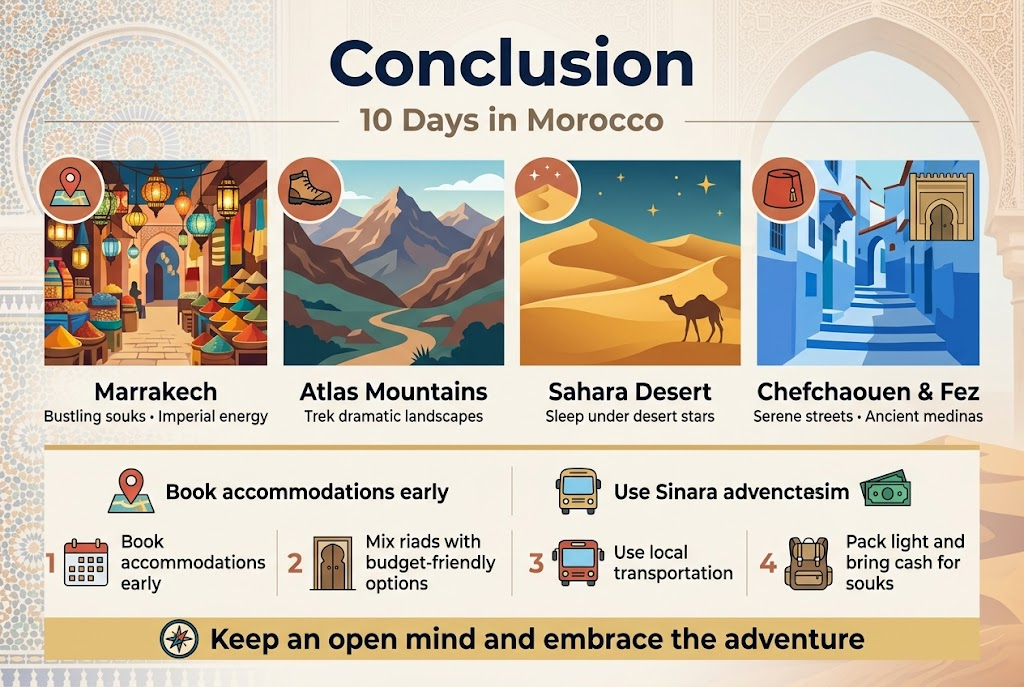
Your 10-day Moroccan adventure will take you through an incredible tapestry of experiences, from the bustling souks of Marrakech to the serene blue streets of Chefchaouen. You’ll trek through the majestic Atlas Mountains, sleep under desert stars in the Sahara, and lose yourself in the ancient medinas of Fez. Each destination offers its own unique magic – the imperial grandeur of Marrakech, the dramatic landscapes of the mountains, the unforgettable silence of the desert, and the rich cultural heritage that flows through every corner of this remarkable country.
With proper planning and smart budgeting, your Moroccan journey doesn’t have to break the bank. Book your accommodations early, mix riads with budget-friendly options, and don’t shy away from local transportation methods – they’re part of the authentic experience. Pack light but thoughtfully, bring cash for the souks, and most importantly, keep your mind open to the unexpected moments that make travel truly transformative. Morocco is waiting to surprise you at every turn, so embrace the adventure and let this ancient land work its magic on you.